
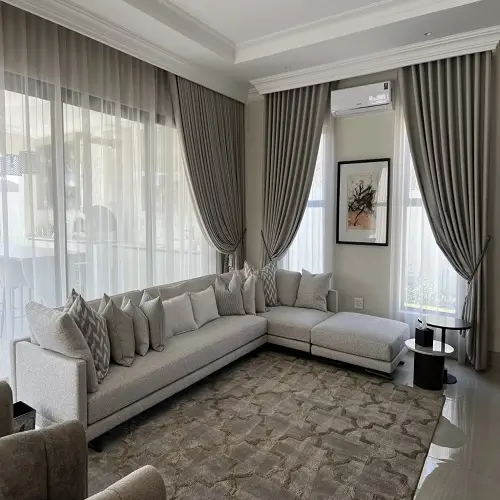
Technology has transformed nearly every aspect of modern living, including how we manage natural light and privacy inside our homes. Curtains, once operated manually with cords or rods, can now function automatically with the help of motors, sensors, and smart home integrations. This innovation offers both convenience and improved energy efficiency.
A smart curtain system combines traditional fabric drapery with automated technology, allowing users to control opening and closing through remote controls, smartphone apps, timers, or voice assistants. Understanding how these systems operate and their practical benefits can help homeowners make informed decisions about integrating automation into their living spaces.
Understanding Automated Curtain Systems and Their Core Components
A smart curtain system is made up of several integrated components that work together to automate movement.
The main parts typically include:
- A motorized track or rod
- A curtain motor
- A power source (wired or rechargeable battery)
- A control system (remote, wall switch, or app)
- Optional sensors for light or temperature
The motor is the central element. It moves the curtain smoothly along a track using a belt or pulley mechanism. The motor receives commands from a controller, which may be connected via Wi-Fi, Bluetooth, or radio frequency.
Unlike traditional drapery systems, a smart curtain operates quietly and consistently, minimizing manual effort while maximizing ease of use. The system is designed to maintain the aesthetic of standard curtains while embedding technology discreetly.
How Motorized Tracks and Sensors Improve Daily Convenience
Motorized tracks eliminate the need to manually pull heavy or tall curtains. This is especially beneficial for:
- Large windows
- High ceilings
- Hard-to-reach areas
- Individuals with mobility limitations
With the press of a button or a voice command, curtains glide open or closed evenly. Advanced systems allow partial opening, giving precise control over natural light.
Sensors enhance convenience further. For example:
- Light sensors can automatically close curtains during peak sunlight hours.
- Temperature sensors can adjust curtains to help regulate indoor heat.
- Timers can align curtain movement with daily routines.
By automating these actions, users reduce repetitive tasks and ensure consistent light management without constant attention.
Integration of Curtains With Smart Home Ecosystems and Apps
Smart curtains often integrate seamlessly into broader smart home ecosystems. They can connect to:
- Voice assistants
- Home automation hubs
- Smartphone applications
- Scheduled routines
Through an app, users can:
- Open or close curtains remotely.
- Create daily or weekly schedules.
- Synchronize curtain movement with sunrise or sunset.
- Monitor system status.
For example, curtains can be programmed to open gradually in the morning to simulate a natural wake-up experience. In the evening, they can close automatically for privacy.
Integration also allows curtains to work alongside lighting systems and thermostats, contributing to a cohesive home automation strategy.
Energy Efficiency Benefits of Timed Curtain Automation
One of the most practical benefits of automation is improved energy efficiency.
Windows are a major source of heat gain and heat loss. Smart curtains help regulate indoor temperatures by responding to environmental changes.
During hot seasons:
- Curtains close during peak sunlight hours.
- Solar heat gain is reduced.
- Air conditioning systems work less intensively.
During cooler seasons:
- Curtains open during the day to allow natural warmth.
- They close at night to reduce heat loss.
Timed automation ensures consistency, which manual systems often lack. Over time, this can support more stable indoor temperatures and reduce unnecessary energy usage.
Automation also ensures curtains are not accidentally left open when the house is empty, helping maintain interior protection and privacy.
Comparing Automated Curtains With Traditional Hanging Systems
Traditional curtain systems rely on manual movement and mechanical hardware. While simple and reliable, they require direct interaction and can wear down unevenly over time.
In manual systems, components such as rings and hooks bear the full weight of the fabric. For example, systems using hook curtains depend on properly aligned hardware to maintain even pleats and smooth movement.
In contrast, motorized tracks distribute weight more evenly and move at controlled speeds. This reduces strain on fabric and hardware. Key differences include:
Manual Systems
- Operated by hand
- May require more force for heavy fabrics
- Simpler installation
- Lower technological complexity
Automated Systems
- Remote or voice control
- Smooth and consistent motion
- Integrated scheduling
- Requires power source
While both serve the same core purpose, automation adds a layer of adaptability and precision that manual systems cannot replicate.
Installation Considerations for Modern Window Automation
Installing smart curtains involves more planning than traditional systems.
Important considerations include:
Power Source
- Wired systems connect to home electrical lines.
- Battery-powered systems offer easier installation but require periodic charging.
Track Placement
The track must be securely mounted to support the motor and fabric weight. Proper alignment ensures smooth operation and prevents strain.
Curtain Compatibility
Not all curtains are suitable for automation. The weight and heading style must align with the motor’s capacity.
Connectivity
A stable Wi-Fi or smart hub connection ensures seamless control. Signal strength near windows should be evaluated before installation.
Professional installation is often recommended for wired systems to ensure safety and correct configuration.
Safety Features and Child-Friendly Automation Mechanisms
Traditional curtains with cords pose potential safety risks, especially in homes with children and pets. Smart curtains reduce these concerns by eliminating dangling cords.
Modern systems often include:
- Obstacle detection that stops movement if resistance is detected
- Soft start and stop functions to prevent sudden jerks
- Secure wireless control without exposed mechanical parts
These features make automated systems safer and more predictable. Additionally, remote operation reduces the need for children to reach high or unstable areas to adjust curtains.
Safety improvements are one of the most practical motivations for adopting automation in family homes.
Maintenance and Troubleshooting of Motorized Curtain Systems
Although smart curtains require minimal daily attention, regular maintenance ensures long-term reliability.
Routine Maintenance
- Keep tracks clean from dust buildup
- Check for fabric obstructions
- Ensure batteries are charged if applicable
- Update connected apps when necessary
Troubleshooting Common Issues
Curtain not responding:
- Check power supply.
- Confirm Wi-Fi connectivity.
- Restart the motor system.
Uneven movement:
- Inspect track alignment.
- Check for fabric bunching.
Unusual noise:
- Clean debris from track.
- Ensure mounting brackets are secure.
Most issues can be resolved with simple checks, while more complex electrical problems may require professional assistance.
Conclusion
Smart curtains represent a practical fusion of interior design and modern technology. By automating light control, improving energy efficiency, and enhancing convenience, they offer functional benefits that extend beyond aesthetics.
From seamless app integration to child-safe mechanisms, automated curtain systems address many limitations of traditional window treatments. With proper installation and routine maintenance, they provide a reliable and efficient solution for contemporary living spaces.
FAQs
1. How do automated curtains operate?
Automated curtains use a motorized track controlled by a remote, app, or smart home system. The motor moves the curtain along the track in response to programmed commands.
2. Can smart curtains connect to voice assistants?
Yes, many systems integrate with popular voice assistants and home automation platforms, allowing voice-based control.
3. Do automated curtains help reduce energy consumption?
Yes, scheduled operation can reduce heat gain and heat loss through windows, supporting more stable indoor temperatures.
4. Are smart curtain systems difficult to install?
Installation complexity depends on the system type. Battery-powered systems are generally easier to install, while wired systems may require professional assistance.
5. What happens during a power outage?
Battery-powered systems continue functioning if charged. Wired systems may stop temporarily but typically resume normal operation once power returns.
6. How long do motorized curtain systems typically last?
With proper maintenance and correct installation, motorized systems can operate reliably for many years, depending on usage frequency and build quality.